Most comparisons of skin tightening treatments compare devices. That is the wrong axis.
What actually separates these treatments is depth: which layer of tissue each one reaches, and therefore which problem each one can address. Once you understand that, the choice becomes considerably clearer, and so does the reason a treatment that worked brilliantly for someone else did nothing for you.
The other issue is that most treatments only target the skin and if the muscle has thinned and lost tone (as occurs with aging and weight loss), then the whole skin is sitting on a sagging hammock. This is why treating all the layers including the muscle will give the best result. We do this with our 3D layered lift.
Skin Tightening Treatments: The Short Answer
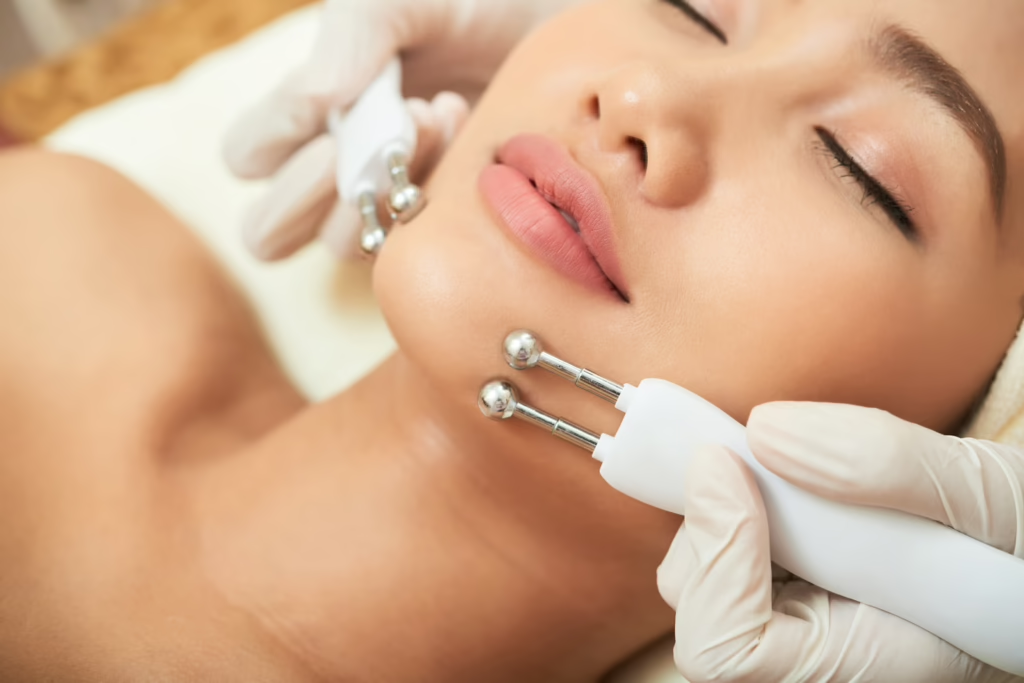
Non-surgical skin tightening works by delivering controlled energy into the skin to trigger collagen production. The modalities differ mainly by the depth they reach: HIFU targets the deep SMAS layer, radiofrequency heats the dermis broadly, RF microneedling combines surface texture work with dermal heating, and laser acts on the upper dermis.
All of them tighten existing tissue. None restores lost volume, and none replaces surgery where there is significant excess skin.
Why Skin Loses Firmness
Collagen production begins declining from the mid-twenties and continues at roughly one per cent a year, accelerating around menopause. Type I collagen provides tensile strength; type III provides suppleness. Elastin, which allows skin to recoil, is barely replaced once damaged.
Alongside this, subcutaneous fat compartments shift and deplete, and the underlying bone changes shape. This is why facial ageing is not simply a skin problem, and it is driven at a cellular level by processes that affect every layer.
Intrinsic ageing is genetic and unavoidable. Extrinsic ageing, meaning UV exposure, smoking and pollution, is the larger contributor in Australia and the more modifiable one.
The Four Modalities Compared
| Depth reached | Best suited to | Sessions | |
| HIFU | Up to 4.5mm, including the SMAS layer | Structural sagging, jowls, neck | 1 to 2, then annual |
| Radiofrequency | Dermis, broadly heated | General firmness, early laxity | Course of several |
| RF microneedling | Adjustable, dermis plus surface | Texture, scarring, pores with mild laxity | Course of 3 to 4 |
| Laser | Upper to mid dermis | Fine lines, tone, surface quality | Sessions depend on which laser is used, results are cumulative |
HIFU focuses ultrasound at set depths, reaching the fibrous layer a surgeon tightens during a facelift. Reaching that layer is not the same as achieving a surgical result, a distinction covered in our guide to HIFU treatment.
Radiofrequency heats a broader volume of dermis to the temperature at which collagen contracts and new collagen is stimulated. Gentler and more gradual than HIFU, and generally better suited to earlier laxity than to established sagging. We combine radiofrequency with restoring tone to the muscle using EMFACE.
RF microneedling delivers radiofrequency through fine needles, combining mechanical stimulation with heat at an adjustable depth. Strongest where texture and firmness are both concerns, including acne scarring.
Laser works photothermally on the upper dermis, improving fine lines, tone and surface quality more than structural laxity. The mechanism runs through changes in gene expression within the skin.
The modality most comparisons leave out
None of the four addresses muscl. EMFACE combines radiofrequency with electrical muscle stimulation, working on the facial muscle layer that supports the skin above it. Where the change is partly loss of underlying support rather than skin quality alone, that is a different problem again.
What No Tightening Treatment Does
Two limits worth knowing before you spend anything.
They do not restore volume. Laxity and volume loss look similar and are not the same. A face that has lost fat, whether through rapid weight loss or ageing, will not be improved by tightening, and some energy treatments carry a risk of fat atrophy that can make hollowing worse. Dr Ritu provides consultations and treatment for lost volume.
They do not replace surgery. Where there is substantial excess skin, energy-based treatment produces disappointment at considerable cost. Being told that is more useful than being sold a course.
This is also why the knowledge of the operator and who trained them matters more than the device. Every modality here delivers controlled thermal injury, and Dr Ritu has spoken about the dangers of the cosmetic laser industry on 9 News. Who is holding the handpiece, and how settings are matched to your skin type, affects outcome and risk more than which brand of device it is.
Here at Dr Refresh, all clinical staff are personally trained by Dr Ritu, specialist dermatologist of 18 years.
Frequently Asked Questions
Are skin tightening results immediate?
No. There may be slight initial tightening from collagen contraction, but this is minor and often temporary. Meaningful change follows new collagen formation and develops over two to six months. As with any treatment working through the body’s healing response, results build progressively.
Can treatments be combined?
The best option for most patients is our 3D layered lift, which combines HIFU and EMFACE in a tailored way.
Combinations are often more effective than any single modality because aging occurs in every layer of the skin and muscle. Dose, depth, and treatment spacing matter, which is why this is planned at consultation rather than assembled from a menu.
Are skin tightening treatments painful?
Sensation varies by modality. HIFU produces heat and deep pulses and with the depths we use, needs prescription numbing cream. Radiofrequency is generally warm rather than painful. RF microneedling involves needling and is usually done with topical anaesthetic. None of them is painless, and clinics describing them that way are not being straight with you.
Which is the best skin tightening treatment?
There is no single best. The right choice depends on which tissue layer is driving the change you have noticed, your skin type, and what you want to achieve. That is a question for examination rather than for an article.
Find Out Which Suits Your Skin
You deserve to know which layer is actually driving the change you have noticed, because that determines which treatment can help and which will disappoint.
Understanding the difference between laxity, volume loss and skin quality is the step that shapes everything after it. Book a consultation with Dr Ritu or her clinically trained team at Dr Refresh to discuss suitability and preparation. Please make an enquiry online, WhatsApp us at 0493 766 096, or call (02) 8014 6505.