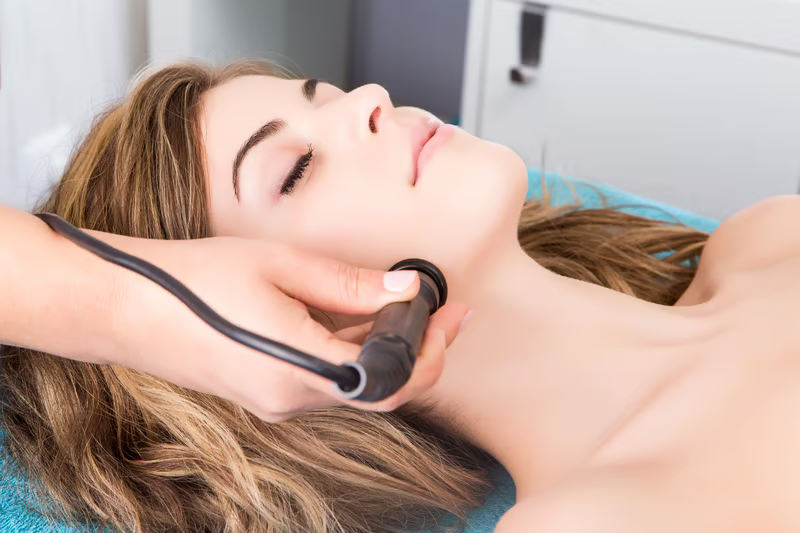
HIFU stands for high-intensity focused ultrasound. It is a non-invasive treatment that uses ultrasound energy to stimulate collagen production in the deeper layers of the face and neck.
Here, at Dr Refresh, we combine HIFU with EMFACE to create a tailored 3D layered lift. This targets not only the skin but also the muscle underneath.
It is frequently marketed as a non-surgical facelift. That framing sets expectations it cannot meet, and it is worth understanding what the treatment actually does before deciding whether it suits you.
HIFU Treatment: The Short Answer
HIFU delivers focused ultrasound energy to precise depths beneath the skin, heating small zones of tissue enough to trigger the body’s repair response and stimulate new collagen. Results develop gradually over two to three months rather than immediately.
It suits mild to moderate laxity. It does not replace surgery, and it does not restore lost volume.
How HIFU Works
Ultrasound energy passes through the skin surface without damaging it, then converges at a set depth in the same way a magnifying glass focuses light to a point.
At that focal point, tissue reaches roughly 60 to 70 degrees, creating a small zone of controlled thermal injury called a thermal coagulation point. The surrounding tissue is unaffected. Devices typically deliver energy at depths of 1.5mm, 3.0mm and 4.5mm, allowing different layers to be targeted in one session.
The 4.5mm depth reaches the superficial muscular aponeurotic system, or SMAS. This is the fibrous layer a surgeon tightens during a facelift, which is where the non-surgical facelift language comes from. Reaching the same layer is not the same as achieving the same result, and the distinction matters.
Those small injuries trigger a wound-healing response. Over the following weeks, fibroblasts lay down new collagen, and the tissue gradually tightens as it remodels. As with any treatment that works through the body’s own healing response, the change is progressive rather than immediate.
What It Treats, and When You See Results
HIFU is used along the jawline and jowls, to lift the cheeks, under the chin, on the neck and décolletage, and around the brow.
There may be slight tightening immediately from collagen contraction, but this is minor and often temporary. The meaningful change follows new collagen formation, becoming visible from around eight weeks and continuing to develop to about three months. Collagen remodelling cannot be rushed, and anyone describing a dramatic immediate result is describing swelling.
Who HIFU Suits
It suits people with mild to moderate laxity. Early jowling, softening along the jawline, mild neck looseness. Skin that has lost some firmness but not a great deal of structure.
It does not suit significant sagging or excess tissue. Where there is substantial loose skin, surgery achieves what energy-based treatment cannot, and attempting to treat it with HIFU produces disappointment and unnecessary cost.
It is not suitable where there is a metal implant in the treatment area, active infection, or open skin.
The distinction most people miss
Laxity and volume loss look similar and are not the same thing.
A face that has lost fat volume, whether through rapid weight loss, ageing or both, will not be improved by tightening alone. There are reports of HIFU causing fat loss, however, this is usually due to poorly performed treatments by non-specialist practices.
This is why specialist expertise and specialist-trained staff, as we have here at Dr Refresh, matter more than the technology. Establishing which component is laxity, which is volume and which is skin quality determines whether HIFU is the right tool or the wrong one.
What to Expect from HIFU
You will feel heat and deep pulses during treatment, and some areas, particularly over bone, are uncomfortable. We use high energy and multiple lines to achieve good results for our patients. This means prescription numbing cream is used to make it more comfortable.
Afterwards, redness, mild swelling and tenderness for a few days are normal. Temporary numbness or tingling can occur. Less commonly, HIFU can cause bruising, prolonged tenderness, welts, burns, temporary nerve effects, or fat loss in the treated area. Avoid saunas and strenuous exercise for a day or two, and use sunscreen daily.
Risk depends heavily on the device settings and on who is holding the handpiece. Dr Ritu has spoken publicly about the dangers of the cosmetic laser industry on 9 News and about unregulated cosmetic clinics in The Australian. Energy devices delivering thermal injury at 4.5mm depth are not a beauty treatment, and the question of who is operating one is a reasonable thing to ask before you book.
Frequently Asked Questions
How many HIFU sessions will I need?
Commonly one to two sessions initially, with maintenance roughly annually. This varies with the degree of laxity and how your skin responds.
Is HIFU permanent?
The collagen produced is real, but ageing continues. Most people find results hold for around a year to eighteen months before maintenance is worthwhile.
How does HIFU compare with radiofrequency?
Depth is the main difference. HIFU focuses energy at set depths including the SMAS layer, while radiofrequency heats a broader area of the upper and mid dermis. Devices such as EMFACE combine radiofrequency with muscle stimulation, addressing a different component again.
This is why we have our tailored 3D layered lift, which combines the two treatments for best results.
Is HIFU a non-surgical facelift?
No. It reaches the same anatomical layer a facelift addresses, but it tightens existing tissue rather than removing or repositioning it. Expecting a surgical result is the most common reason people are disappointed by it.
Find Out Whether HIFU Suits Your Skin
You deserve an honest answer about whether a treatment will do what you want it to, including when the answer is that something else would suit you better.
Understanding whether you are dealing with laxity, volume loss or skin quality is the step that determines which treatment is appropriate.
Book a skin and face analysis with Dr Ritu or her clinically trained team at Dr Refresh to discuss suitability and preparation. Please make an enquiry online, WhatsApp us at 0493 766 096, or call (02) 8014 6505.