What’s the first thing that comes to mind when you hear the word “laser”? Are you thinking of red, peeling skin? Days of hiding indoors, or what people call “laser downtime”?
These images come from older, more aggressive ablative lasers that literally obliterate skin layers to promote regeneration. And while these lasers are effective, they come with disadvantages or medical downtime. Your skin will take several weeks to fully heal before you can safely return to your daily activities.
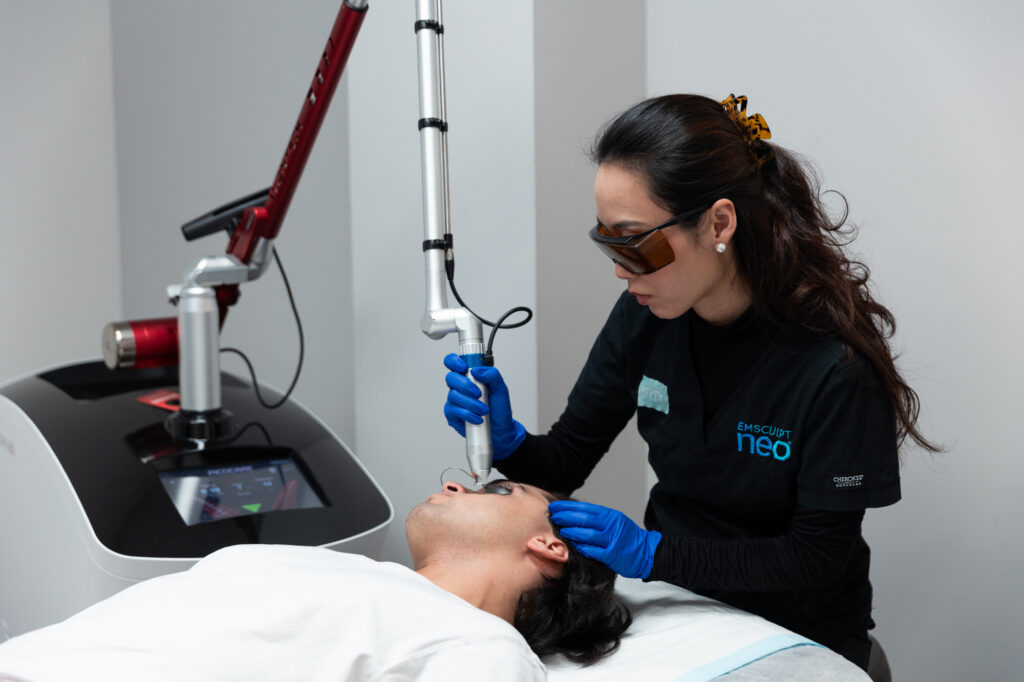
But here’s the good news. You don’t need to live with this fear anymore, now that there’s a modern upgrade called the Picosecond laser. Instead of vaporising skin tissue, Picosecond lasers use ultra-short bursts of energy, trillionths of a second, to shatter pigment and stimulate natural collagen production. All these without damaging the surrounding skin!
Picosecond laser technology offers minimal social downtime. You can go back to work, run errands, and resume social plans even almost immediately after your session!
Let’s address common myths with an honest, day-to-day look at what recovery from a Picosecond laser procedure looks like. We will provide you with a clear picture of what your skin will look and feel like, from Day 1 through the moment you’re glowing once again.
What to Expect Before You Leave the Clinic
Picosecond laser treatments are quick. Before you leave the clinic, your skin has already begun its journey towards healing.
Here’s what to expect.
Appearance
After the procedure, your skin will look flushed like a mild sunburn after a day at the beach. This is normal and only temporary, lasting from only a few hours to a day. Some people have noticeable redness, while some develop a pink glow that may last longer. Don’t worry, this isn’t irritation; it’s your skin’s natural healing response.
Sensation
Expect slight warmth and a gentle tingling sensation in the treated area. Some people compare it to “freshly exfoliated” skin, so there’s no discomfort. It will resolve within the first hour or once the clinic staff applies cooling gel or a cold compress over the area.
Pigment
The treated area will also look slightly darker in people with sunspots or pigmentation. Some patients also report having white, powdery, or frosted skin after the session. This is a sign that the pigment has absorbed the laser energy and is breaking underneath the surface. Eventually, this discolouration will fade in the next few days.
Actionable Advice
A soothing gel will be applied over the affected area to calm the skin. You will also need to wear SPF 50 sunscreen to protect from UV exposure. These help keep skin in healing mode, ensuring the best results and faster recovery.
Your Day 1 Recovery Plan
By the time you arrive home, your skin has already changed dramatically. Day 1 is about gentleness, hydration, and protecting your glow.
Here’s how to treat your skin until the next morning.
Evening: Cleanse, Calm, and Hydrate
Skip your regular skincare products. Keep things simple by using only gentle, soap-free cleansers with lukewarm water. Avoid scrubbing and refrain from exfoliating. Use a clean towel and gently pat your skin dry. You may also be recommended a light, hydrating serum or a post-laser repair gel to soothe skin and lock in moisture. Do not use heavy creams or oils.
Next Morning: Fresh-Faced and Ready
By the time you wake up the next day, most of the redness and warmth are already gone. Your skin will be calmer and refreshed and you may now return to your routine. Just remember to keep things minimal.
You may apply mineral-based makeup for light coverage, but avoid heavy or fragranced products. Don’t forget your SPF 50+ sunscreen, as your fresh skin is more sensitive to sunlight.
Key Message: Back to Normal – Almost Instantly
Picosecond lasers are amazing, as most patients feel more confident returning to work or resuming their daily activities the next day. You don’t need to hide because there’s no peeling or excessive redness. You’ll have smoother, clearer skin in no time.
The Healing Process: What’s Happening Under the Skin
After the initial phase, healing will now concentrate behind the scenes, where the real change happens. Over the next several days, your skin will look and feel like the following:
Days 2 to 4: The Pigment Reaction Phase
The treated pigment or sunspots may appear darker, indicating that the Picosecond laser treatment is working correctly. The laser pulses have already shattered pigments into tiny fragments and your body is now breaking them down. You may also see small, sand-like, “micro-crusts” on the skin’s surface. These are normal and may feel slightly textured but not painful.
Days 5 to 7: The Flaking and Renewal Stage
The micro-crusts will eventually heal and disappear, leaving skin fresh and more even-toned. These dry bits look like coffee grounds and simply lift away as the skin heals. And no matter what happens, do not pick, scrub, or peel them as these may lead to irritation, pigmentation, or more scarring.
Skincare: Keep It Calm and Clean
As always, simple and gentle skincare rules throughout the week. Use only mild cleaners to clean your skin and afterwards, apply a hydrating serum and finish with an SPF 50+ sunscreen. Avoid using exfoliants, acids, retinoids, or products with active ingredients until your dermatologist allows them.
Aftercare for Lasting Results
Your treatment does not end when you leave our clinic. This is just the beginning of a new partnership between you and your skin. The key to maintaining a smooth and glowing appearance lies in consistency and protection.