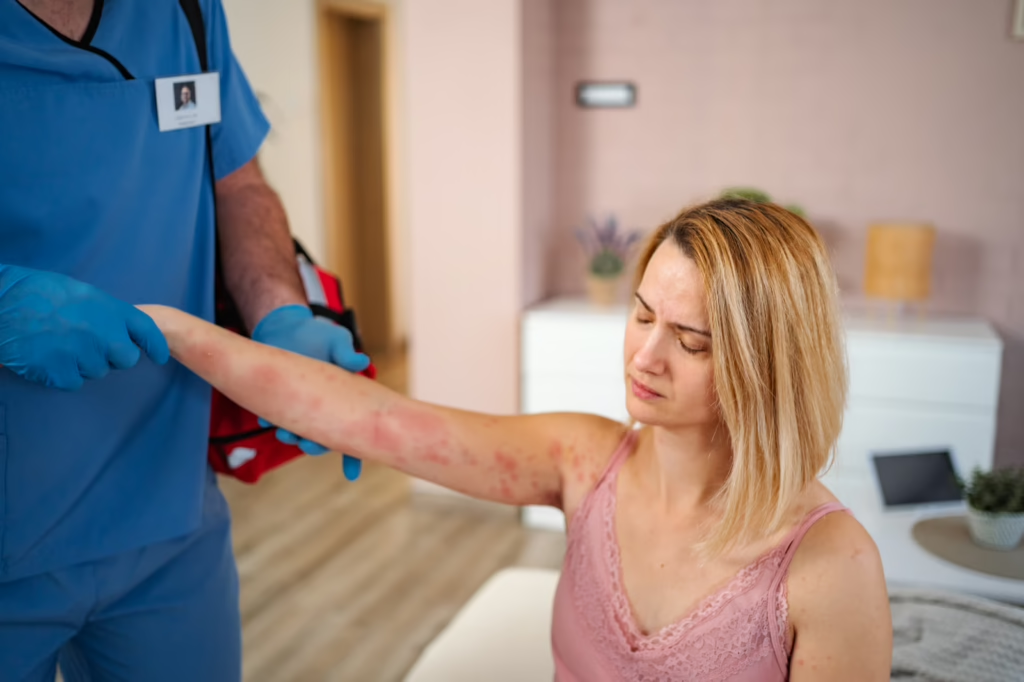
Psoriasis is a long-term condition, and for many people living with it, the frustration is less about any single flare and more about the cycle: a cream that works for a while, a patch that comes back, and a sense that nothing quite gets on top of it.
Treatment has changed a great deal over the past two decades. Most people with psoriasis can now achieve good control, but getting there usually means matching the treatment to the type and severity of psoriasis rather than cycling through products.
At Dr Refresh, psoriasis is assessed and managed by specialist dermatologist Dr Ritu Gupta. You do not need a referral to be seen at Dr Refresh, although consultations with a GP referral attract a Medicare rebate. Treatment plans are tailored to each person.
What Is Psoriasis?
Psoriasis is an immune-driven inflammatory condition. The immune system speeds up the turnover of skin cells, so new cells reach the surface in days rather than weeks and build up as thick, scaly plaques.
It is not contagious, and it is not caused by poor hygiene. It tends to run in families, and it often follows a pattern of flares and quieter periods throughout life.
The Main Types
- Plaque psoriasis. The most common type: raised, red, well-defined patches with silvery scale, typically on the elbows, knees, lower back and scalp.
- Scalp psoriasis. Thick scale on the scalp, often extending past the hairline. It is frequently mistaken for dandruff. Our guide to itching, burning or tenderness on the scalp covers other causes worth ruling out.
- Guttate psoriasis. Many small, drop-like spots that appear suddenly, often in younger people after a throat infection.
- Inverse psoriasis. Smooth red patches in skin folds such as the armpits, groin and under the breasts, usually without much scale.
- Nail psoriasis. Pitting, discolouration and lifting of the nails.
- Less commonly, psoriasis can become widespread or pustular. Psoriasis covering most of the body, or with fever and feeling unwell, needs urgent medical attention.
Psoriasis Is More Than Skin Deep
About 1 in 4 people with psoriasis develop psoriatic arthritis, which causes joint pain, swelling and morning stiffness. Early treatment helps prevent joint damage, so joint symptoms are worth raising with your doctor.
Psoriasis is also associated with a higher risk of heart disease, diabetes and other metabolic conditions. Psoriasis is also more common in people with inflammatory bowel disease such as ulcerative colitis and Crohn’s disease. It can affect mood, sleep and confidence too. Good management looks at the whole picture, not just the plaques.
Common Triggers
Triggers vary between people, but common ones include stress, infections, skin injury (new plaques can form along a scratch or cut), cold dry weather, smoking, alcohol and some medications. Psoriasis also worsens with trauma, so picking and scrubbing at thick scaly patches actually makes psoriasis worse. Many people find their psoriasis improves in summer, although sunburn can trigger a flare.
Living With Psoriasis Day to Day
Alongside medical treatment, small habits make flares easier to manage
Moisturise straight after showering, while the skin is still slightly damp. On the scalp, softening thick scale before washing makes treatments work better than scratching or picking it off, which can trigger new plaques.
Keeping a note of what seems to set off flares, whether stress, illness, alcohol or a change of season, helps you and your doctor spot patterns. Stopping smoking and reducing alcohol can also improve how well psoriasis responds to treatment.
How Psoriasis Is Treated
Treatment usually follows a step-by-step approach, moving up when the current level is not enough.
- Everyday care. Regular moisturising softens scale and reduces itch. Soap-free washes and lukewarm showers protect the skin barrier. Our article on scaling and peeling skin explains why barrier care matters.
- Topical treatments. For mild to moderate psoriasis, prescription steroid creams and vitamin D-based creams are the mainstay, often used together. Scalp psoriasis may need medicated shampoos, solutions or scale-softening preparations. As with any steroid treatment, using enough, for the prescribed time, is what makes it work.
- Phototherapy. Narrowband ultraviolet B light therapy, given in a specialist setting two to three times a week, is effective for more widespread psoriasis. It is carefully dosed and monitored, which is very different from sunbathing or solariums.
- Oral medicines. For moderate to severe psoriasis, or psoriasis that affects the joints, tablets that dampen the immune response or vitamin A-based tablets may be used. They require regular blood tests and monitoring.
- Biologic and targeted medicines. These newer treatments block specific parts of the immune pathway that drive psoriasis. In Australia, they are subsidised through the Pharmaceutical Benefits Scheme for severe chronic plaque psoriasis when strict eligibility criteria are met, and they must be prescribed by a dermatologist.
Every treatment carries potential side effects, which your dermatologist will discuss with you before you start.
Frequently Asked Questions
Can psoriasis be cured?
There is currently no cure, but it can be well controlled. Many people have long periods with clear or nearly clear skin on the right treatment.
Is it psoriasis or eczema?
Psoriasis plaques are usually thicker, more sharply defined and more scaly than eczema, and they favour the outer elbows and knees, while eczema prefers the inner creases. Our guide to eczema treatments covers that condition in more detail.
Do I need to see a dermatologist?
Many people with mild psoriasis are well managed by their GP. A dermatologist is worth seeing if your psoriasis is extensive, affects your face, scalp, nails or genitals, is not responding, or if you may be eligible for advanced treatments.
Will sunlight help?
Many people improve in summer, but sun exposure is not a treatment plan. Unprotected sun increases skin cancer risk, and sunburn can trigger new plaques. Medical phototherapy is the controlled version.
Get on Top of Psoriasis
Psoriasis is a lifelong condition for most people, but living with uncontrolled plaques does not have to be part of it. Matching the treatment to the type and severity is what makes the difference.
If your psoriasis is not well controlled, Dr Ritu and her clinically trained team can review your treatment and discuss the options available. Contact us to book an appointment on (02) 8014 6505, or online, or via WhatsApp on 0493 766 09.