You may have heard and seen people saying that it’s easy to achieve fairer, clearer, and healthier skin just by applying a product or undergoing a quick procedure. They promise rejuvenation in one go, a one-and-done treatment. Sadly, many fall for these marketing hypes and have never achieved the skin they have always wanted.
That is because the skin is a dynamic, living organ. It is constantly affected by various environmental stressors and the natural process of ageing. From ultraviolet (UV) radiation and air pollution to oxidative damage, the skin suffers progressive changes that affect how skin cells function and the dermal structure.
Therefore, there is no quick fix; even professional skin rejuvenation procedures require ongoing treatment, allowing the skin to gradually recover and build its own structure. With multiple treatment sessions, patients safely achieve their overall goal
The Biology of Tissue Remodelling
Tissue regeneration is a unique process that happens deep within the skin, at the cellular level.
Fibroblast Activation
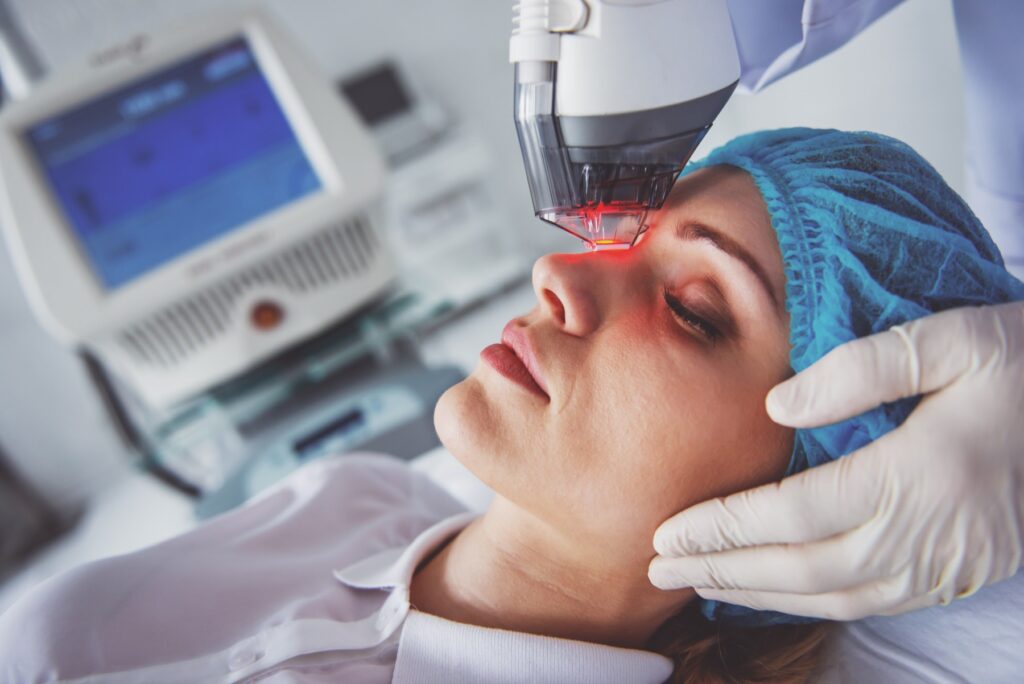
Energy-based devices are the most common treatments for skin rejuvenation. Dermatologists use resurfacing lasers, picosecond lasers and broadband light systems (BBL), applying these in a safe setting to create micro-injuries on the skin.
Bringing this advanced technology to the forefront, Dr Refresh houses the largest selection of lasers of any dermatology practice in NSW. With six distinct laser types curated by Dr Ritu to safely accommodate all skin types, our practice ensures every patient is expertly assessed and treated in a premier specialist setting dedicated entirely to skin, body, and muscle care.
Following these targeted micro-injuries, the skin responds by triggering an inflammatory response within the dermis; this is when the skin starts to repair itself. Fibroblasts start to synthesise structural proteins such as collagen and elastin. These help the skin maintain its firmness and elasticity.
Once new collagen unfolds, early tissue remodelling begins, which may take anywhere from 3 to 6 months to mature. When this happens, the extracellular matrix starts to become more organised. It is during this time that you can already notice improvements in your skin’s overall appearance.
The Limit of Single Acute Trauma
At this time, you may start to wonder, “If laser treatments are so powerful, why can’t I get my skin fixed in one go?”
It’s not as simple as blasting an age spot. A single treatment may only stimulate the fibroblasts to a limited degree before safety thresholds are reached. You can’t apply continuous and excessive laser energy in one sitting, as this can lead to thermal damage and worsen the existing condition.
This is exactly the reason why cumulative treatment with the use of repeated controlled stimulation is more effective and safer. It stacks the regenerative responses over time, supporting the skin’s remodelling while ensuring results are predictable and achieved safely.
Managing Ongoing Epigenetic and Environmental Stress
The skin never takes a break. Various epigenetic and environmental stressors, both internal and external factors, can greatly affect the outcome of resurfacing treatments.
Continuous Exposure
If you’re always outdoors, forgetting to apply sunscreen, and have been doing these since you were young, continuous exposure to UV radiation, air pollution, and oxidative stress causes serious cumulative damage to skin. This damage is persistent, often beyond the clinical setting.
These factors lead to serious and ongoing cellular strain, including DNA methylation changes and genetic modifications, which are all critical in the repair, synthesis of collagen, and antioxidant defence. Your skin starts to decline even without suffering from any acute injury.
Clinical Maintenance
Environmental and genetic factors are clearly unavoidable, with their damaging effects ongoing. Because of these, skin management must be more efficient and effective. Using spaced and cumulative resurfacing treatments creates a repeated but controlled stimulation of the skin’s repair processes. Each session triggers a regulated wound-healing response that promotes cellular turnover and dermal remodelling.
Rather than permanently correcting skin issues, this ongoing maintenance plan allows the skin to adapt to the effects of ongoing environmental and internal stress over time.
The Clinical Strategy: Safe Spacing and Controlled Injury
Safe treatment spacing and applying controlled injuries are the most effective strategies, providing the best results.
The Rationale for Treatment Intervals
In a clinical setting, BBL, picosecond and resurfacing lasers are deliberately spaced, usually at 4 to 6 week intervals. A single intensive session can sometimes be appropriate for deep resurfacing laser in fair-skinned patients.
The timing for the treatments is based on a patient’s specific biological requirement to resolve their skin’s inflammatory and reparative phases after a controlled injury.
The Inflammatory Cascade
Energy-based resurfacing methods create a predictable inflammatory response, a process that’s critical to triggering tissue repair. It starts
Energy-based resurfacing modalities initiate a predictable inflammatory cascade. This process is essential to trigger tissue repair. The cascade of events is as follows:
- Immediate inflammatory signalling
- Proliferation of fibroblasts
- Extracellular matrix remodelling
The controlled inflammation is therapeutic and remains tightly regulated. If additional thermal injury is applied before the cascade has resolved, it may exceed the skin’s physiological tolerance, leading to potential complications.
Recovery and Tissue Stabilisation
Adequate spacing between resurfacing sessions allows the epidermal barrier to fully re-epithelialise and restore its protective function. The immune cells begin to clear cellular debris and damaged proteins from the treated area. Meanwhile, newly synthesised collagen fibres undergo early maturation and structural organisation within the dermal matrix.
Preventing Over-Treatment and Supporting Safety
It is vital that resurfacing treatments are evenly spaced to support safety and avoid over-treatment.
The key is to avoid overlapping thermal injury, which can overwhelm repair mechanisms, increase the risk of complications such as prolonged inflammation, impaired barrier function, or delayed healing.
Allowing full recovery before starting the next treatment ensures that each phase builds upon a stabilised and functional tissue environment. This approach also supports a predictable healing outcome while maintaining the epidermal and dermal structures throughout the treatment.
The Patient Pathway: Consultation, Risks, and Recovery
A laser resurfacing treatment is a medical process that requires personalised planning and assessments, conducted by a qualified practitioner.
Mandatory Clinical Consultation
Patients must undergo a comprehensive assessment before the treatment. This is a critical step when selecting correct energy parameters and designing interval spacing plans depending on the patient’s Fitzpatrick skin type, medical history, and degree of photodamage. A thorough assessment ensures that the approach is appropriate and within safe clinical parameters.
The Recovery Process
Recovery occurs after each session within the treatment series. Some treatments such as BBL and picosecond lasers, have no downtime. After resurfacing lasers, patients may expect temporary redness, swelling, and epidermal peeling. Treatments are staged so that recovery occurs after each session.
Potential Risks
Just like all energy-based procedures, repeated treatments have potential risks, including post-inflammatory hyperpigmentation (PIH), hypopigmentation, prolonged erythema, and, in rare cases, scarring. Since individual biological responses vary, outcomes cannot be guaranteed.
Next Steps: Skin & Face Analysis at Dr Refresh
Managing structural skin health requires a strategic, evidence-based approach to cellular function and tissue remodelling. To discuss a customised, cumulative treatment pathway tailored to your biological needs, contact Dr Refresh to schedule a comprehensive clinical assessment.
Disclaimer: Any medical or invasive procedure carries risks. Before proceeding, you should seek a second opinion from an appropriately qualified health practitioner. Individual results may vary.