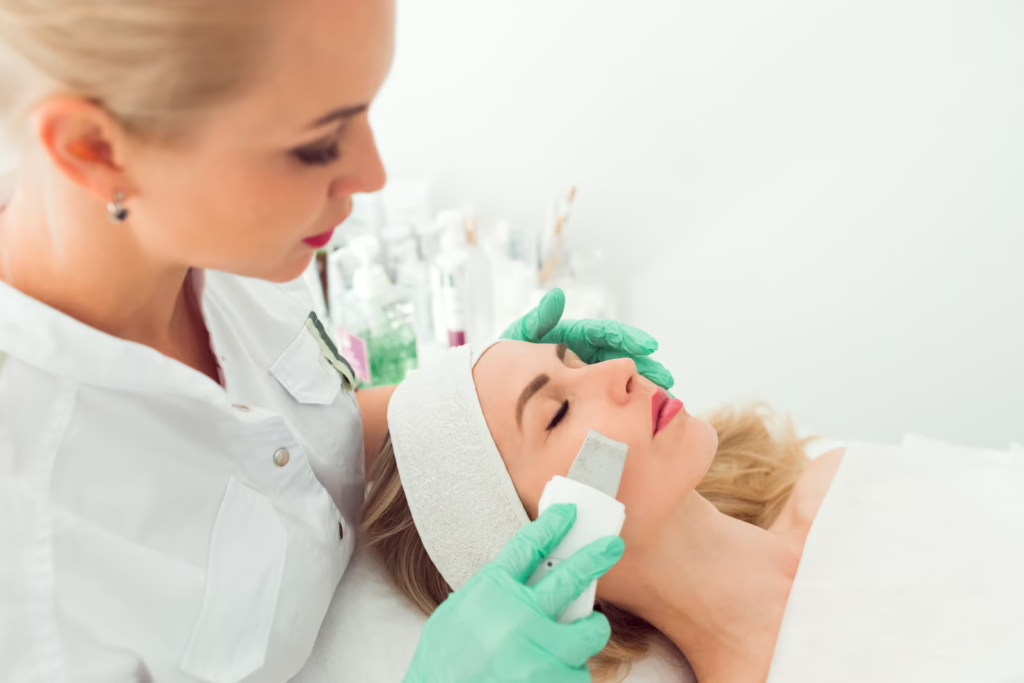
Ablative laser resurfacing removes damaged surface skin and heats the deeper dermis, prompting the skin to regenerate and lay down new collagen. It remains the most substantial non-surgical option for deep lines, significant sun damage and scarring.
How deep that treatment goes is the decision that matters, and it is the difference between Refresh 5 and Refresh 10.
Both combine fractionated CO2 laser with erbium resurfacing. The CO2 component delivers energy into the deeper dermis for collagen remodelling. The erbium component works with greater surface precision and less residual heat, refining the outer layer. Together they address both depth and surface in a single treatment.
Refresh 5 is the lighter of the two, treating more conservatively with a shorter recovery. Refresh 10 treats more intensively, reaching deeper and achieving more in a single session, with a correspondingly longer and more demanding downtime.
Neither is better. On what we are treating, your skin type, and whether you have 4 or 7 days of recovery time available. As always, consultation is key to achieving all the above.
Conditions We Treat with Laser Resurfacing
Deep Lines & Wrinkles
Established lines, particularly around the mouth and eyes, respond to ablative resurfacing in a way lighter treatments cannot match. Improvement develops as new collagen forms.
Acne & Surgical Scarring
Indented scarring is a structural change requiring remodelling at depth. Deeper scarring may need more than one session.
Sun Damage & Photoaging
Years of accumulated UV damage, including rough precancerous patches, can be treated alongside pigmentation and texture concerns.
Skin Texture & Pore Appearance
Roughness, irregular texture and enlarged pore appearance improve as the surface regenerates.
Skin Firmness
Collagen and elastic tissue laid down in response to dermal heating continue developing for three to six months after treatment.
Why Choose Us
Depth Matched to Your Skin, Not a Package
Refresh 5 and Refresh 10 are two settings of the same technology. Which one is appropriate is a clinical judgement based on your skin type, what you are treating, and your tolerance for downtime.
Specialist Assessment of Skin Type
Ablative resurfacing carries a higher pigmentation risk in deeper skin tones. Conservative settings, pre-conditioning where indicated, and realistic discussion of that risk are part of planning, not an afterthought.
Honest Downtime Information
Recovery is significant and we will not understate it. Refresh 5 requires 4 days at home, and Refresh 10 requires 7 to 10 days and a cleared calendar. You will be advised what each involves before we decide.
Structured Aftercare
Healing is actively managed rather than left to a handout. Aftercare compliance affects both the result and the risk of complications.
Treatment by Experienced Clinical Staff
Ablative laser removes tissue. Settings, technique and skin type assessment determine whether the outcome is good or whether it creates a new problem.
Preparation and Aftercare Are Part of the Treatment
The outcome of ablative resurfacing is determined as much by what happens before and after as by the session itself. Skin preparation, pigment risk assessment, antiviral cover where indicated, and structured healing support all affect the result.
Specialist dermatologist Dr Ritu Gupta and her clinically trained team assess suitability, preparation and recovery capacity before recommending either treatment. Individual healing timelines and results vary, all procedures carry risks, and suitability is determined at a personal consultation.
FAQs
What is the difference between Refresh 5 and Refresh 10?
Treatment depth and intensity. Refresh 5 treats more conservatively with a shorter recovery. Refresh 10 treats more deeply, achieving more in one session, with longer and more demanding downtime.
How much downtime should I plan for?
Refresh 5 requires several days of visible recovery. Refresh 10 typically requires seven to ten days away from work and social commitments, with residual pinkness continuing for weeks afterwards. Individual healing varies.
What does recovery involve?
Days one and two bring marked redness, swelling and a sunburn sensation. Days three to five, the skin darkens and peels, and itching is common. Fresh pink skin appears from around day six. Pinkness fades gradually over the following weeks. Occlusive ointment, gentle cleansing, no picking and absolute sun avoidance are required throughout.
What are the risks?
Beyond expected redness, swelling and peeling: infection including cold sore reactivation, post-inflammatory pigmentation particularly in deeper skin tones, prolonged redness, and very uncommonly scarring.
Rarely, delayed loss of pigment can occur months to years afterwards and is permanent. These risks are discussed fully before treatment.
How many sessions will I need?
Many people achieve their goal in one treatment. Deeper scarring may require two or three, spaced months apart.
Who is not suitable?
Contraindications include active infection or acne, recent use of certain oral acne medications, a history of keloid scarring, and some autoimmune or healing conditions. Deeper skin tones generally require conservative settings and preparation rather than exclusion.