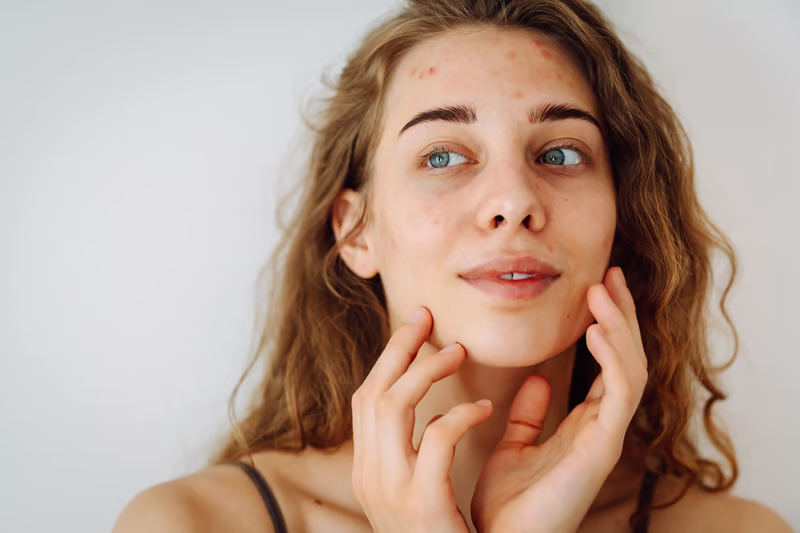
Many women assume acne ends with their teens. For a large number it either never quite goes away or appears for the first time in their late 20s, 30s or 40s, often in a different pattern from the acne they remember.
Adult hormonal acne tends to sit lower on the face, flare with the menstrual cycle and respond poorly to the products that worked at 16. It is also one of the most common reasons adult women see a dermatologist.
At Dr Refresh, adult acne is assessed by specialist dermatologist Dr Ritu Gupta, with the aim of controlling active breakouts early enough to limit scarring. Where marks or scars have already formed, acne scar treatment may be discussed once the acne is under control. Suitability is assessed individually.
What Hormonal Acne Looks Like
The typical pattern is deep, tender, red bumps along the jawline, chin and around the mouth, sometimes extending onto the neck. These spots often sit under the skin for days without coming to a head, and they can leave marks that last much longer than the spot itself.
Flares commonly occur in the week or so before a period. Blackheads and whiteheads may be fewer than in teenage acne, while the deeper, sore lumps are more prominent.
Dr Ritu has discussed why adults develop cystic acne on ABC Radio, and covered acne more broadly on ABC 702.
Why It Happens
Hormonal acne is driven largely by androgens, the hormones that stimulate the oil glands. Most women with adult acne have normal hormone levels on blood tests.
What differs is how sensitive their oil glands are to those hormones, which explains why acne can flare with the menstrual cycle even when nothing is technically abnormal.
Other common contributors include:
- Stopping or changing the contraceptive pill
- Stress and poor sleep
- Heavy or pore-blocking skincare and makeup
- Some medications
- Pregnancy, the post-partum period and perimenopause
- Whey protein supplements make acne worse
When to Check for an Underlying Cause
In some women, acne is one sign of a broader hormonal condition such as polycystic ovary syndrome. It is worth seeing your GP for assessment and blood tests if acne comes with irregular or absent periods, new coarse hair growth on the face or body, thinning scalp hair, or difficulty managing weight. Treating the underlying condition often helps the skin.
How a Dermatologist Treats Adult Acne
Treatment is chosen according to the type of acne, how severe it is, whether it is scarring, and what else is going on, including plans for pregnancy. It usually combines more than one approach.
- Skincare that does not make it worse. A gentle cleanser, a non-comedogenic moisturiser and daily sunscreen form the base. Over-the-counter ingredients such as benzoyl peroxide, salicylic acid and azelaic acid can help milder acne. Dr Ritu has covered the most common azelaic acid mistakes for Adore Beauty.
- Prescription topical treatments. Vitamin A-based creams and gels, combined with topical antibacterial medicine treat blocked pores and inflammation. They take around eight to twelve weeks to show their full effect. Newer treatments include anti-androgen based creams (like being on the oral contraceptive pill but without needing a tablet). These reduce the hormonal component of adult acne.
- Hormonal treatments. For acne with a clear hormonal pattern, certain contraceptive pills and anti-androgen tablets reduce the effect of hormones on the oil glands. These need a doctor’s assessment because they are not suitable for everyone.
- Oral treatments for more severe acne. When acne is deep, scarring or not responding, a course of oral antibiotics or an oral vitamin A derivative may be considered. In Australia, the latter is prescribed by specialists, usually a dermatologist, and requires monitoring and strict pregnancy prevention.
- In-clinic treatments. At Dr Refresh, we offer several laser and light therapy-based treatments for acne that can be combined with the above medications or used by themselves.
Dr Ritu has also discussed Acne Awareness Month with The Sun-Herald and The Age, and modern acne treatment with The Australian.
Why Early Treatment Matters
The deep, inflamed spots typical of hormonal acne are the ones most likely to leave scars and dark marks, particularly in darker skin tones. Controlling breakouts early limits that damage.
Once acne has been under control for some time, remaining scars can be assessed. Our article on the picosecond approach to acne scars explains one of the options used. Being treated by a specialist dermatologist and her clinical staff means that risks are rare and outcomes are usually excellent.
Frequently Asked Questions
Can hormonal acne go away on its own?
Sometimes, but it often persists for years without treatment, and waiting increases the risk of scarring. Treatment is worth considering if acne is affecting your skin or your confidence.
Do I need blood tests?
Not always. Most women with adult acne have normal hormone levels. Tests are useful if there are other signs such as irregular periods or excess hair growth.
Will changing my diet fix hormonal acne?
Diet can play a modest role for some people, but it is rarely the whole answer. The exception to this is that whey protein supplements both can cause acne and make existing acne worse. Medical treatment is usually needed for persistent or deep acne.
Can makeup make hormonal acne worse?
Heavy or oily products can block pores and add to breakouts. Look for makeup labelled non-comedogenic, and remove it fully each night with a gentle cleanser.
What if I am planning a pregnancy?
Tell your doctor. Several acne treatments are not suitable during pregnancy or while trying to conceive, so your plan may need to change.
How long does treatment take to work?
Most acne treatments need two to three months before you can judge whether they are working. Adding in laser and energy-based treatments can clear acne faster and also treat scarring at the same time, and minimise the need for medication.
Take Control of Adult Acne
Adult hormonal acne is common and treatable, and the earlier it is managed properly, the less chance it has to leave lasting marks.
If breakouts along your jaw and chin keep returning, Dr Ritu and her clinically trained team can assess what is driving them and discuss the options that suit you. Contact us to book an appointment on (02) 8014 6505, or online, or via WhatsApp on 0493 766 09.