Facial ageing is rarely one problem. The skin loses collagen and elasticity. The facial muscles that hold everything in position lose tone. And deeper still, the fibrous layer supporting the face gives way under gravity over time.
Most treatments address one of those layers. Treating one while the others continue to change is the most common reason people feel a result looked good briefly, then faded faster than expected.
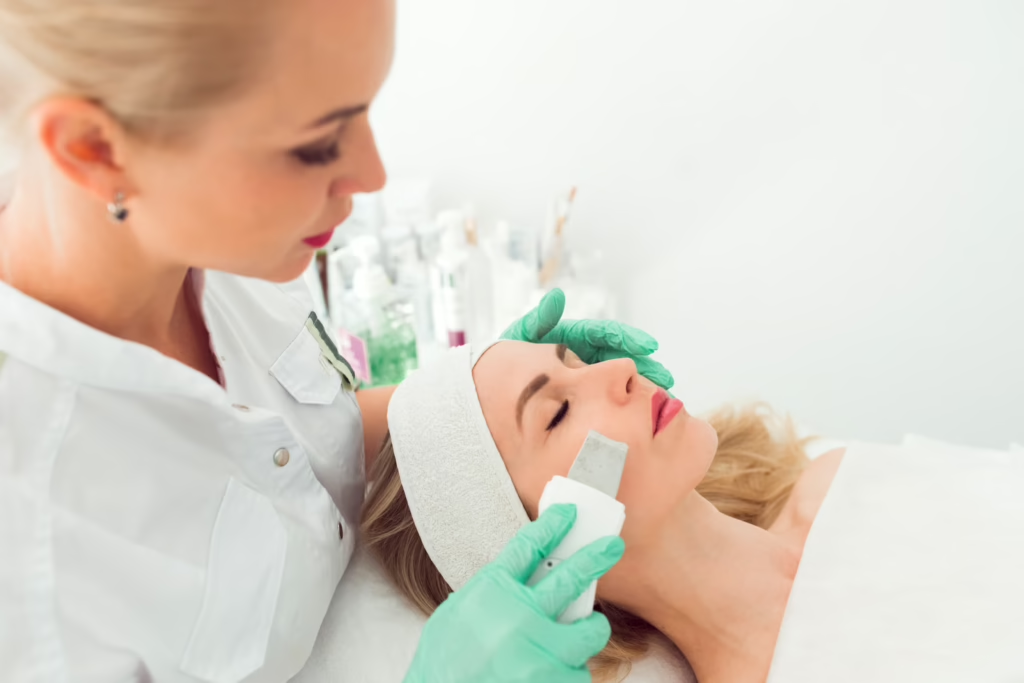
The 3D Layer Lift is a tailored combination of two technologies, selected to work at different depths. EMFACE delivers synchronised radiofrequency and electrical muscle stimulation, working on skin quality and facial muscle tone at the same time. HIFU uses focused ultrasound to reach the deeper SMAS layer, the same fibrous layer addressed during surgical lifting.
Used together and sequenced appropriately, they address the three structural layers rather than the surface alone. What that combination looks like for you is determined at consultation, because the proportion of skin, muscle and structural change differs considerably between individuals.
Conditions We Treat
Softening Jawline & Jowling
As deeper structural support loosens, definition along the jaw is often the first thing to go. Focused ultrasound reaches the supporting layer directly, while muscle stimulation addresses the tone beneath.
Loss of Mid-Face Support
Flattening through the cheeks reflects changes in both muscle and deeper support. Treating the muscle layer addresses a component that skin-directed treatment cannot reach.
Early Neck Laxity
Mild looseness through the neck and under the chin responds to energy delivered at the right depth, provided the change is laxity rather than excess tissue.
Skin Firmness & Fine Lines
Radiofrequency stimulates collagen in the dermis, improving firmness and surface quality alongside the structural work.
Brow Position & Upper Face
Loss of support through the brow and upper face can be addressed where the underlying change is tone and laxity rather than volume.
Why Choose Us
Specialist-Led Assessment Before Any Treatment
Your consultation is with a specialist dermatologist or her specialist-trained clinical staff. Establishing which layer is actually driving the change you have noticed determines whether this combination suits you, or whether something else would serve you better.
Three Technologies, Different Depths & Targets
EMFACE and HIFU are not interchangeable, and combining them is not automatically better than either alone. Where both are appropriate, sequencing and dosage used matter, and that is a clinical decision rather than a package.
Honest Expectations
This is not a facelift and it does not produce a surgical result. Where there is significant excess skin, surgery achieves what energy-based treatment cannot, and we will advise you of this.
Device Operation by Trained Clinical Staff
Both devices deliver energy into tissue at depth. Who operates them, the doses used, and how settings are matched to your anatomy affect both outcome and risk.
Results That Develop Over Months
Collagen and elastic tissue remodelling is gradual. Expect change to build over two to three months rather than appearing immediately, and we will advise you of this upfront.
Treating the Face as a Structure
We assess the face as skin, muscle, fat and bone rather than as a surface. Where volume has been lost rather than support, tightening alone will not help, and some energy-based treatments can make hollowing more apparent.
Specialist dermatologist Dr Ritu Gupta and her clinically trained team assess all of these components before recommending anything. Individual results vary, all procedures carry risks, and suitability is determined at a personal consultation.
FAQs
What is the 3D Layer Lift?
A tailored combination of EMFACE and HIFU, selected to address three layers: skin, facial muscle, and the deeper supporting layer. The combination and sequence are determined at consultation rather than being a fixed package.
Is this a non-surgical facelift?
No. HIFU reaches the same anatomical layer a surgeon addresses during a facelift, but it tightens existing tissue rather than removing or repositioning it. Expecting a surgical result is the most common reason people are disappointed by non-surgical lifting.
How long before I see results?
There may be minor immediate tightening, but meaningful change follows new collagen formation and develops from around eight weeks, continuing to about three months.
Does it hurt?
HIFU produces heat and deep pulses, and some areas over bone are uncomfortable. The doses we use are very comfortable with prescription numbing cream applied prior. EMFACE is generally experienced as warmth with muscle contraction. It is needle-free and pain-free.
What are the risks?
Expected effects include redness, mild swelling and tenderness for a few days. Less commonly, HIFU can cause bruising, temporary numbness or tingling, and fat atrophy in the treated area. Neither treatment is suitable where there are metal or electronic implants in the treatment zone.
Who is not suitable?
People with significant skin excess, where surgery is more appropriate. People with metal or electronic implants in the treatment area, active infection, or broken skin. Suitability is assessed individually.